
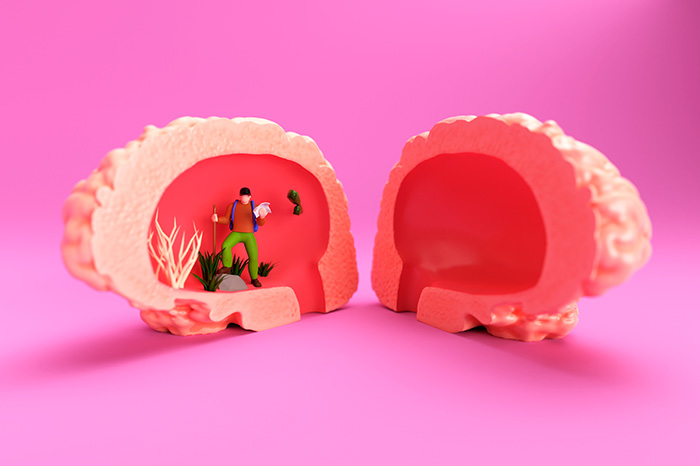
I’m a Neurosurgeon — 7 everyday habits that are quietly damaging your brain
Seven takeaways:
This week’s piece draws on the insight of Dr. Randy D’Amico, director of the Brain and Spine Metastasis Program of Neurosurgery at Northwell Lenox Hill Hospital. He identifies seven all-too-common habits whose long-term effects on the brain are often overlooked, and which are best avoided. These habits are:
- Sitting too much. Inactivity hurts your blood vessels, including the ones that feed your brain. We spend so much time at our desks nowadays, and we need to break up the day with movement. But it is important to note that you don’t have to be an athlete. Aim for the American Heart Association’s 150 minutes of moderate exercise or 75 minutes of vigorous exercise a week. “Your brain expects your body to move,” D’Amico says.
- Treating sleep like it doesn’t matter. Your brain uses the time you spend asleep as its time to do maintenance. This is when it consolidates the day’s learning and organizes/embeds memories. Reduced or poor-quality sleep hinders attention span, memory sharpness, and mood regulation. The CDC recommends at least seven hours a night, and D’Amico says keeping a regular schedule matters as much as the total.
- Living on ultraprocessed foods. It is important to think of your overall diet, not any single food or dish. But one of the most harmful food groups is also one of the most common: processed foods. Eating mostly refined and processed food affects weight, cholesterol, blood sugar and blood pressure, and all of those affect the brain. In D’Amico’s words: “What’s good for your arteries is good for your brain.”
- Ignoring your numbers. The important health measurements are easy to ignore, because they often have little negative effect on day to day health. But: high blood pressure, high cholesterol and diabetes damage the blood vessels that supply the brain. Because you can feel fine for years while the damage builds, D’Amico reminds us to keep an eye on all three.
- Living in a constant state of distraction. Phones, notifications and doomscrolling break up our attention, get in the way of sleep, and crowd out activities that challenge the mind. D’Amico’s fix is to build boredom back in. He now reads every night with everything else switched off. “You don’t need to fill every empty moment with stimulation.”
- Letting your social world shrink. Social isolation is a known and studied modifiable risk factor for cognitive decline and dementia. Real conversation exercises attention, language, memory and emotional processing. “It’s not the same as having 20,000 social media followers.”
- Using substances to regulate how you feel. Tobacco harms blood vessels and the brain, and heavy drinking is linked to cognitive harm. A bigger problem, he says, is relying on nicotine to concentrate or alcohol to unwind or fall asleep, because that builds dependence into your daily routine. The goal is to find ways to manage stress, fatigue and sleep without a substance.
D’Amico’s wisdom reminds us: stay mindful of these habits and remember that nearly every choice you make shapes your brain health. And chances are, what’s good for your brain will be good for the rest of you too.
By McKenzie Beard for The New York Post
Read the whole story.
This site may contain links to articles or other information that may be contained on a third-party website. Advisory Services Network, LLC and MAP Strategic Wealth Advisors are not responsible for and do not control, adopt, or endorse any content contained on any third party website. The information and material contained in linked articles is of a general nature and is intended for educational purposes only. Links to articles do not constitute a recommendation or a solicitation or offer of the purchase or sale of securities.